InTouch
InTouch (FS120075) is the system that helps you to communicate at all Scout activities and events. It's flexible and lets Groups and Sections work out the best way to keep in touch during these activities.
FS120075 (Published July 2026, replacing May 2026)
Introduction to the InTouch system
Whenever any activity, event or meeting is run within Scouts, it's a requirement that an InTouch system is put in place (POR 9.a.1.1). This is to make sure:
- everyone involved is aware of how communication will take place between the volunteers, young people, parents and carers, and those not at the event
- there are details of who's present should anything go wrong and there's a system in place in the event of an emergency.
The procedures put in place to make sure this are likely to vary at different types of events due to the differing circumstances and needs. To facilitate this, InTouch is a process that you must follow to make sure that everyone is clear as to what will be put in place for every Scouts event.
When to use an InTouch system
As the reasons for having InTouch remain the same for all types of activities and events, an InTouch system needs to be in place for every event or activity within Scouts.
This is the case from the regular weekly meeting, through to the multiple-week international expedition and from the Beaver Scout games evening, to an adult only residential. Naturally these examples are likely to use very different procedures, but they'll need to go through the process and define what procedures they'll be using.

Setting up an InTouch system
Here's a step-by-step approach guiding you through the process of setting up an InTouch system, as well further guidance on areas and issues to look at within this and suggestions on how these can be managed.
Areas to think about:
- How will you hold the details of all those taking part in an event, and the contact details of their parents and carers, or emergency contact/next of kin, so that they can be accessed as required?
- What system will you use if you need to contact a parent or carer individually? For example, informing them of a slight injury to a participant requiring first aid.
- What system will you use if you need to contact all parents and carers at the same time? For example, informing them that the coach has been held up and will be back an hour later than previously stated.
- What guidelines have you given to parents and carers about how or when they'll be communicated with throughout the event?
Areas to think about:
- What contact details of the Volunteers will you give to the parents and carers?
- What advice or guidelines will be given to parents and carers as to how to contact the event and when/why communication is expected or appropriate?
Areas to think about (not only during peer-led activities, but also when young people are given more independence during volunteer-led activities):
- What contact details of the Volunteers will you give to the participants?
- What advice or guidelines will be given to participants as to how to contact the Volunteers?
- What advice or guidelines given to participants as to when/why communication is expected or appropriate?
- How will you make sure you follow the Yellow Card and Staying Safe online guidance?
Areas to think about:
- What system and level (if any) of communication will there be between participants and parents and carers?
- Will mobile phones, use of social media (or similar) be allowed at the event? If so, what guidelines are in place?
Areas to think about:
- Do records of all those present need to be held by anyone away from the event and, if so, by who?
- How will you contact your Lead Volunteer or their designate in the case of an emergency (as per POR Chapter 7 - Emergency Procedures) at any point during the event?
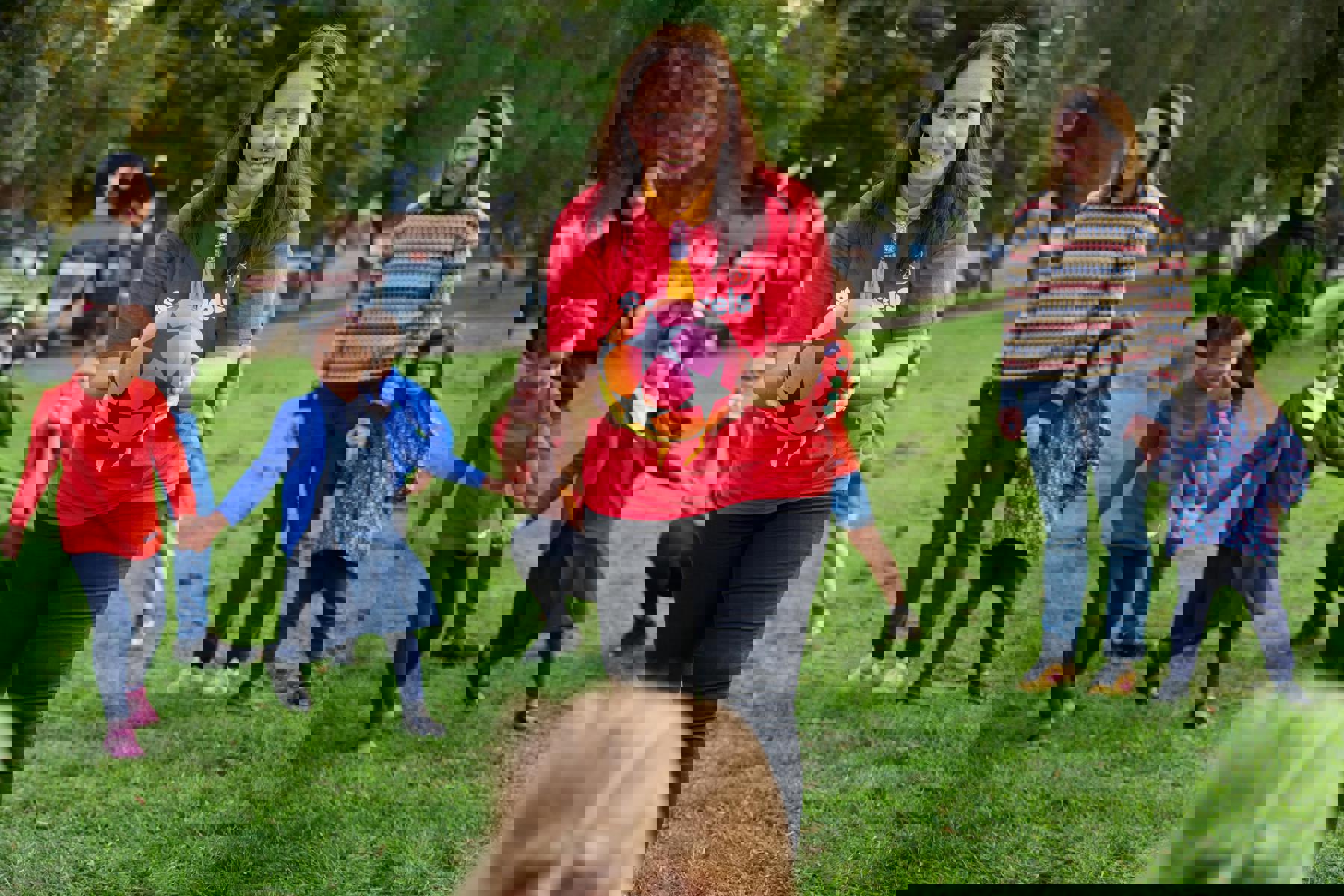
The process
- ‘Volunteers’ refers to those volunteers running or at an event, as well as volunteers responsible for an event, but not present.
- ‘Parents’ refers to parents and carers and/or next of kin.
- ‘Participants’ refers to young people taking part in an activity.
- ‘Meeting Place’ refers to the regular building or location a section, Group, or Unit meet in.
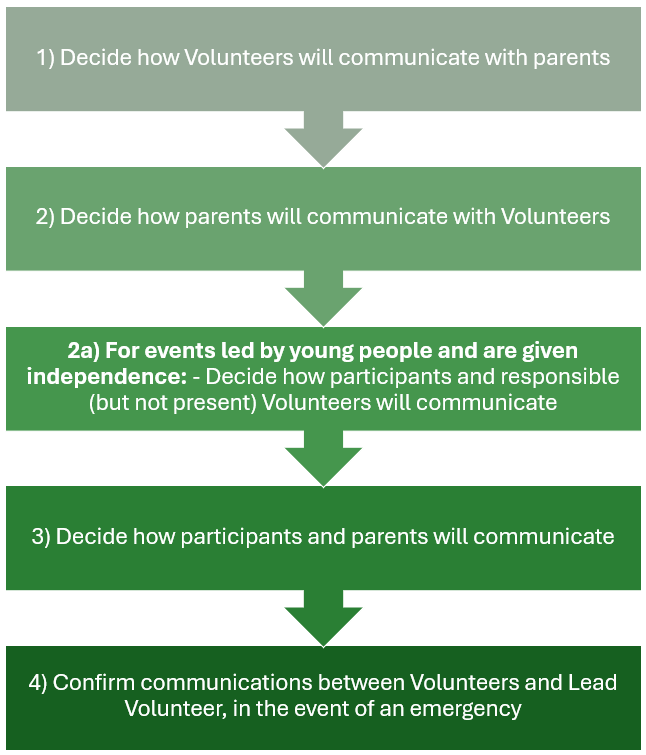
The reasons for having InTouch in place are just as valid for the weekly meeting as they are for events away from your meeting place.
Therefore, it's important to have an InTouch system set up for these meetings as well. This doesn’t mean lots of extra work and a third party required every week. It's simply that you need to go through the process to make sure a system is in place that can then be used for all your meetings.
It's likely that most of, or all of, these things that the InTouch process highlights are things you'll be doing already, such as:
- parents and carers knowing the phone number for the meeting place and Volunteers
- parents and carers providing their details, including details of next of kin or emergency contact for all new members
- having a plan in place for emergencies
In some situations (possibly events that take place over a longer period or overseas), it can be useful to have a third party/parties away from the event to be the central point for communications.
This can take the pressure off Volunteers to allow them to concentrate on running the event.
In situations such as these, the third party will need to have the details of everyone attending the event and emergency contact details for their next of kin. They should also have a copy of the Purple Card
They'll need to be available to be contacted throughout the event. As they'll have the personal and contact details of the young people involved, they'll also need to have completed an Internal Checks.
If relying on a third party, it's important to think about what'll happen if there's an incident that requires their involvement, but one of the people affected by the incident is related to or well-known by the third party.
Would they be in a position to, or be expected to carry out their role? If not, how will that communication take place?
Each volunteer team will have their own systems of holding records for the young people in their care. This might be through the personal detail record cards, activity information forms, a database or other means.
If this is data you already hold, you'll need to make sure you have a procedure for making sure it's kept up to date. To avoid duplication of data, it should be possible to use these records for each event (amended as and if necessary), including providing details for any third party involved.
Rather than filling out any new form, it'll generally be easier to provide copies of the records you hold for this third party.
Find out more about data protection and record management.
The emergency procedures of The Scout Association are clearly defined in POR Chapter 7.
To make this process as simple and straight forward as possible for those running an event, you can get an Emergency Procedure Prompt Card that can be kept on you and in the case of an emergency will take you step by step through the process.
To make this process as simple and straight forward as possible for those running an event, you can get a Purple Card that can be kept on you and in the case of an emergency will take you step by step through the process.
It's important to include adults within any InTouch system that you have in place.
This is the case for adults, such as volunteers and parent/carer helpers, at events for young people, as well as adults at adult only events, such as Scout Network or training events.
Don’t forget that when referring to ‘parents and carers’ this scheme also means next of kin or an emergency contact, which is likely to be more relevant for adults.
Mobile phones and access to the internet can be a very useful tool for your InTouch system. But, there are a number of issues that you need to think about if you're going to use them:
- Will there be a signal or internet access where you are? What will you do if there is no signal?
- Will volunteers use their personal devices or could you have a Group phone?
- Will you be able to charge the device, and if not, what will you do if the battery dies? You could take a charger, a second device or a portable power bank.
- If you're storing all of the contact details on one of these devices, and the battery then dies, how will you find these details if you need them? How will you keep any digital printed copies of personal details safe and secure?
- If the young people have mobile phones or other devices and contact their parents and carers, or peers, about anything happening during the event, how will you know what has been shared?
It may be useful to have some sort of agreement with the young people and their parent and carers to include areas, such as:
- When it's acceptable to use phones or the internet
- What they're not acceptable for
- How to let volunteers know what information about the event you are sharing.
For large scale events, such as jamborees, District or County events, it's just as important that there's an InTouch System in place. This is the responsibility of the organisers and also those leading groups attending the event.
The organiser's InTouch System will look at what contingents and/or groups are attending and how they communicate with them.
The contingents and/or groups system will look at who is a member of their party and how to communicate with their parents and carers.
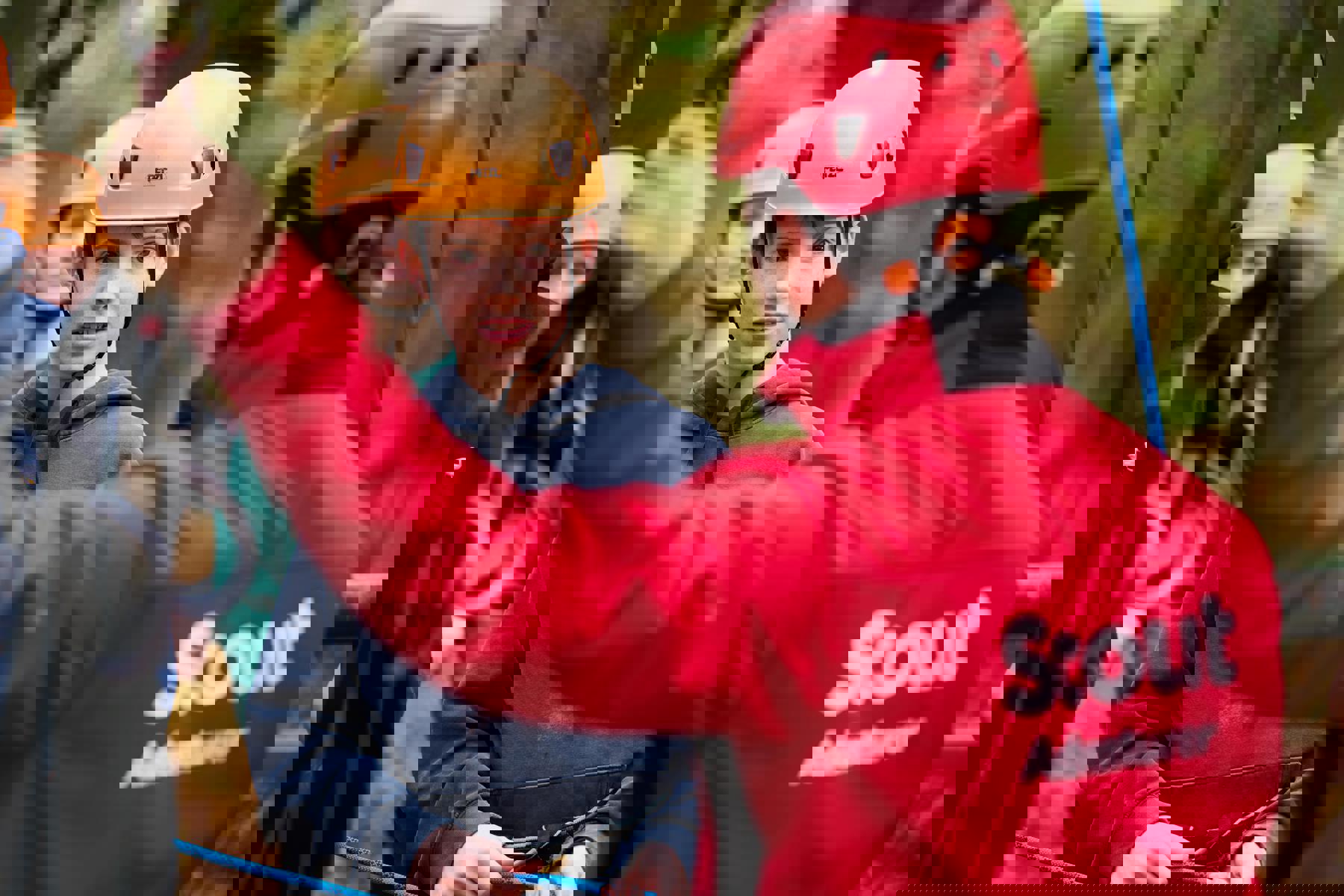
Examples of different types of InTouch systems
Here are some examples of the different types of InTouch system that should be set up for different events. They're included to demonstrate best practice in Scouts.
1. The leader in charge and the volunteer team have up-to-date personal, medical, and emergency contact details for all the Scouts and volunteers.
2. Parents/carers receive the Scout Team Leader’s contact details when their child joins.
3. Contact details are regularly checked and updated for accuracy.
4. The use of mobile phones by the Scouts is discouraged during the meeting, as there is no need for them to communicate with parents/carers.
5. The leader in charge has the Group/District Lead Volunteer contact details and a copy of the Purple Card.
1. The leader in charge and the volunteer team have access to up-to-date personal, medical, and emergency contact details for all the Beavers and volunteers.
2. Parents/carers are given the Beaver Team Leader's contact details when their child first joins, and the team members' contact details if these differ from those used when visiting places away from the meeting place.
3. Regular checks are made to make sure personal, medical and emergency contact details are correct and current.
4. Contact details for the Group/District Lead Volunteer and have a copy of the Purple Card to hand.
1. The leader in charge and the volunteer team have access (including physical copies if needed) to up-to-date personal, medical, and emergency contact details for everyone attending the camp.
2. Parents/carers are provided with the leader-in-charge’s contact number for emergencies only and should contact the designated InTouch person first for any questions or concerns.
3. The InTouch contact holds a full list of attendees and is regularly updated by the camp team for any changes, including arrivals and departures.
4. The InTouch contact shares updates with parents/carers through agreed communication channels (e.g., social media, messaging app, or website). Parents/carers are reminded that they will only be contacted directly if there is a problem.
5. Young people are discouraged from using phones during activities to avoid distractions. If they wish to contact parents/carers, they should speak to the volunteer team first.
6. The leader in charge and the volunteer team have contact details for the District Lead Volunteer and a District Leadership Team Member, including availability. Attendance details are left with the Group Lead Volunteer. A copy of the Purple Card is available.
1. The leader in charge and the volunteer team have access to the personal, medical and emergency contact details of everyone attending the trip, including the volunteers supporting the trip. There is a landline phone at the hostel where they are staying.
2. Parents/carers are given the leader in charge's contact details and the number for the hostel being used. They are reminded to use these in an emergency.
3. Explorers can communicate with those not attending the trip, but they should not disrupt the activities. Any issues or concerns with the trip are discussed with the leader in charge.
4. The leader-in-charge has the contact details for the District Lead Volunteer and has provided the 14-24 Team Leader with information about their programme and trip itinerary. A copy of the Purple Card is available.
1. Members provide next-of-kin details to the event organisers upon arrival and retain these records for the duration of the event.
2. Organisers have a dedicated mobile phone line, which has been shared with network members for attendees to contact them, and an event social media channel and website page for general updates.
3. Organisers hold contact details for the County Lead Volunteer, maintain a central record of attendees and their next-of-kin details, and have a copy of the Purple Card.
1. The Team Leader and the leader in charge of the watersports event hold emergency contact details for all attendees.
2. The Team Leader's contact details are included in the event information, which is accessible to the leader in charge and the delivery team, and also includes a copy of the Purple Card.
3. There are no restrictions on attendees communicating with home.
4. The Team Leader has contact details for the County Lead Volunteer and an up-to-date attendance list.
1. The Team Leader holds and maintains personal details for all Explorers and will have access to them throughout the weekend, including physical copies if needed by the leader in charge.
2. As the Team Leader will be at home, an agreed method of communication with the leader in charge on the ground will be used.
3. Volunteers ensure all contact details are up to date before the expedition.
4. All parents and carers are given the contact details of the leader in charge when their young people first join.
5. All expedition members are given the contact details of their leader in charge.
6. The leader in charge and the support team have mobile numbers for all expedition members and for the accommodation.
7. Expedition members identify phone locations along the route in case mobiles fail and agree with the leader in charge on any check-in times.
8. Parents/carers and Explorers are informed that there is no need to communicate during the expedition.
9. If a problem arises, the leader in charge or the Team Leader, as the designated InTouch contact, will contact parents/carers, as Explorers may not be able to do so themselves.
10. The Team Leader and leader in charge have contact details for the District Lead Volunteer and a list of who is taking part in the expedition. A copy of the Purple Card is available.
1. The leader in charge and the volunteer team have access (including physical copies if needed) to up-to-date personal, medical, and emergency contact details for all participants.
2. Parents/carers are provided with the leader-in-charge’s mobile number and the Centre’s phone number for emergencies only.
3. A full adult member of The Scout Association in the UK acts as the InTouch contact. They hold full attendance details and will share updates with parents/carers if needed.
4. The InTouch contacts use agreed communication channels (e.g., website, social media, messaging app) to provide updates. Parents/carers are reminded that no direct contact usually means everything is going well.
5. Mobile phones are discouraged during activities. Communication opportunities are provided at agreed times, and any contact with home must be discussed with the volunteer team.
6. The leader in charge and the volunteer team have contact details for the District Lead Volunteer and a District Leadership Team Member, including availability. A copy of the Purple Card is available.
Contingent Events managed by UK Headquarters follow a different InTouch process due to their scale.
1. The Contingent has a national InTouch contact who serves as the link between the event, Contingent and families.
2. The national contact is used for emergencies only.
3. In the event of an emergency, the parents/carers must contact their Scout member via the national contact.
4. This enables the Contingent Management Team to provide support.
5. All event attendees must provide up-to-date emergency contact details.
Please note:
- For Jamborees, a Unit InTouch contact may be requested.
- This supports communication between families and the Contingent Team.
- Families should contact the Unit InTouch contact in such cases.
1. The leader in charge and the volunteer team have access (including physical copies if needed) to up-to-date personal, medical, and emergency contact details for all participants.
2. Volunteers ensure they have a reliable means of communication at all times and confirm contact details are current.
3. Parents/carers are provided with Explorer Section Team Leader contact details when their young person first joins, and the team members' contact details if these differ from those used when visiting places away from the meeting place.
4. Before free time, the Explorers are briefed on clear boundaries and rules. They stay in small groups, each group having volunteer contact details. Volunteers hold at least one mobile number for each group. Groups are given a set time limit and shown meeting points before setting off. A volunteer should remain at each meeting point.
5. Parents/carers and young people are reminded that communication during the activity is not necessary. If a problem arises, the responsible volunteer will contact parents/carers, as young people may not be able to do so themselves.
6. The leader in charge has contact details for the District Lead Volunteer, has a copy or access to the Purple Card, and a record of who are participating in the activity.
1. The leader in charge and the volunteer team hold a list of all attending families, including up-to-date personal, medical, and emergency contact details for all young people and adults.
2. An off-site InTouch contact is designated to hold a copy of the attendance list and emergency contact details for someone not attending the camp.
3. Parents/carers are briefed that they retain primary responsibility for the supervision and welfare of their own children throughout the event, while the volunteer team is responsible for the programme and overall site safety.
4. Routine communication on-site is managed through daily briefings or a group messaging app to ensure all families are aware of the programme and any safety updates.
5. The leader in charge provides families with a dedicated mobile number or campsite contact point to reach the volunteer team during the event.
6. As families are attending together, young people are discouraged from using mobile phones during activities. Any specific photography or social media guidance is shared with parents/carers before the event.
7. The leader in charge has contact details for the Group/District Lead Volunteer and a copy of the Purple Card.
Purple Card
Safe Scouting: What to do in an emergency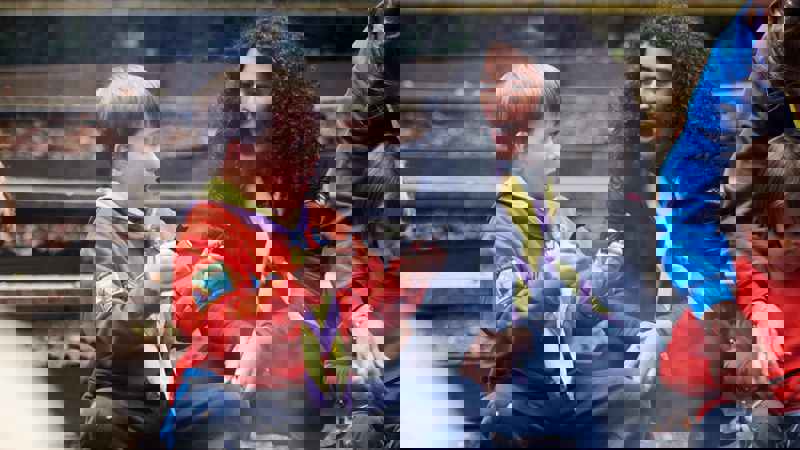
Take a look at our activity information form for parent and carers to share information and obtain their permission for activities, outings and nights away.
POR Chapter 7
Read our policy on emergency proceduresPOR Chapter 9
Read 9.a.1.1.2h InTouch system